Connectivity HSS Gamepad Complete Guide: Setup & Pairing
Quick Answer
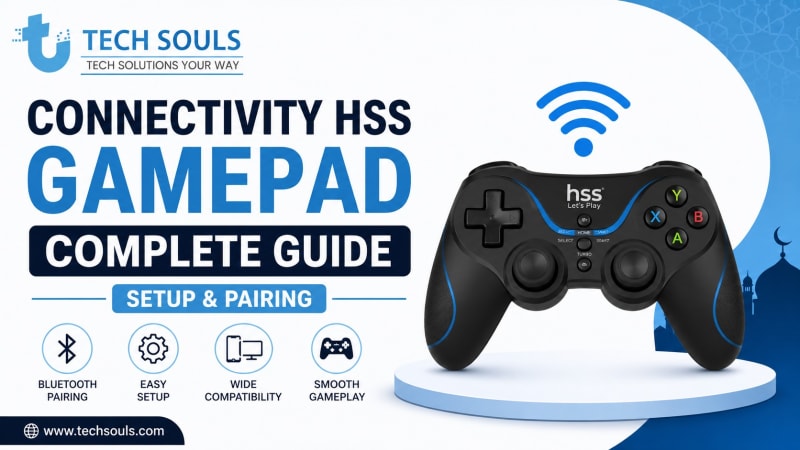
The Connectivity HSS Gamepad is a wireless gaming controller that typically connects to Android phones, Windows PCs, smart TVs, and some other compatible devices using Bluetooth, USB, or a 2.4GHz wireless receiver. The exact connection method depends on the controller model and the device you're using. Pairing usually involves putting the controller into pairing mode, enabling Bluetooth (or plugging in the USB receiver), and selecting the controller from the available devices.
If your controller isn't connecting, common fixes include restarting the device, re-entering pairing mode, charging the battery, removing previously paired devices, or updating Bluetooth and controller drivers.
What Is the Connectivity HSS Gamepad?
The Connectivity HSS Gamepad is a wireless gaming controller designed for players who want to enjoy games on multiple platforms without relying solely on a keyboard, mouse, or touchscreen controls. Depending on the specific model, it may support Bluetooth connectivity, a USB wired connection, or a dedicated 2.4GHz wireless USB receiver.
Unlike platform-specific controllers, many HSS gamepads aim to provide cross-device compatibility, allowing users to switch between smartphones, tablets, Windows PCs, Android TVs, and selected gaming platforms.
Since official public documentation for HSS controllers is limited, available features and supported devices can vary between models. Always check the product manual or packaging for model-specific instructions before pairing.
Key Features of Connectivity HSS Gamepad
Although specifications differ by model, many Connectivity HSS Gamepads include features such as:
- Wireless Bluetooth connectivity
- USB wired mode
- 2.4GHz wireless receiver support
- Rechargeable battery
- Dual analog joysticks
- Responsive D-pad
- Action buttons (A, B, X, Y)
- Shoulder buttons and triggers
- Turbo function
- Vibration feedback (supported models)
- Ergonomic grip
- Multi-device compatibility
- Low-latency wireless gaming
These features make the controller suitable for casual gaming, cloud gaming, emulators, racing games, sports games, and action titles.
Connectivity Options Explained
One of the biggest advantages of the Connectivity HSS Gamepad is its flexibility. Most models support one or more connection methods.
1. Bluetooth Connection
Bluetooth is the most convenient way to connect the controller without cables.
Best For
- Android phones
- Android tablets
- Windows laptops
- Windows desktops
- Smart TVs
- Some iOS devices (model dependent)
Advantages
- No cables required
- Easy pairing
- Portable
- Works with many modern devices
Limitations
- Slightly higher latency than USB
- Bluetooth compatibility varies between devices
- Pairing issues can occur if another device is already connected
2. USB Wired Connection
Many HSS controllers can also operate using a USB cable.
Best For
- Windows PCs
- Laptops
- Compatible Android devices (with OTG support)
Advantages
- Stable connection
- Lowest input delay
- No battery drain during gameplay
- No wireless interference
Limitations
- Requires a cable
- Less convenient for mobile gaming
3. 2.4GHz Wireless Receiver
Some models include a small USB receiver (dongle) that provides a dedicated wireless connection.
Best For
- Desktop PCs
- Android TV boxes
- Smart TVs
- Devices without reliable Bluetooth support
Advantages
- Faster response than standard Bluetooth in many cases
- Stable connection
- Simple plug-and-play setup
Limitations
- Requires the included USB receiver
- Easy to misplace the dongle
- Limited USB port availability on some devices
Bluetooth vs USB vs 2.4GHz Wireless
| Feature | Bluetooth | USB Cable | 2.4GHz Receiver |
| Wireless | ✅ | ❌ | ✅ |
| Easy Setup | ✅ | ✅ | ✅ |
| Lowest Input Lag | ❌ | ✅ | ✅ |
| Battery Required | ✅ | ❌ | ✅ |
| Best for Mobile | ✅ | Limited | Limited |
| Best for PC | Good | Excellent | Excellent |
| Charging While Playing | ❌ | ✅ | ❌ |
| Connection Stability | Good | Excellent | Excellent |
Which Option Should You Choose?
- Choose Bluetooth for convenience and mobile gaming.
- Choose USB for competitive gaming and the lowest latency.
- Choose 2.4GHz wireless if your controller includes a receiver and you want wireless performance with minimal delay.
Device Compatibility
Compatibility depends on the exact controller model, but many Connectivity HSS Gamepads work with the following devices.
| Device | Compatibility | Recommended Connection |
| Android Phone | ✅ | Bluetooth |
| Android Tablet | ✅ | Bluetooth |
| Windows PC | ✅ | USB / Bluetooth / 2.4GHz |
| Windows Laptop | ✅ | Bluetooth |
| Android TV | Usually Supported | Bluetooth or USB Receiver |
| Smart TV | Model Dependent | Bluetooth |
| iPhone | Limited (depends on model and iOS support) | Bluetooth |
| iPad | Limited | Bluetooth |
Note: If your device doesn't recognize the controller immediately, check whether it requires a specific input mode (such as XInput or DirectInput) or whether the game itself supports external controllers.
Before You Start Pairing
To avoid connection problems, complete these basic checks first:
- Fully charge the controller.
- Turn on Bluetooth (if using wireless mode).
- Remove old Bluetooth pairings if necessary.
- Keep the controller within a few feet of the device during initial setup.
- Make sure no other device is actively connected to the controller.
- Install any required drivers if connecting to Windows via USB.
Pro Tip
For the most stable gaming experience on a Windows PC, use a wired USB connection or the included 2.4GHz receiver whenever possible. Bluetooth is convenient, but a dedicated wireless receiver or USB cable generally provides lower input latency for fast-paced games.
How to Set Up the Connectivity HSS Gamepad
Once you've chosen your preferred connection method, setting up the Connectivity HSS Gamepad is usually straightforward. The exact button combination may vary by model, but the overall process is similar across most wireless controllers.
Before you begin:
- Charge the controller to at least 50%.
- Turn on Bluetooth (if pairing wirelessly).
- Keep the controller within 1–2 meters (3–6 feet) of the device.
- Disconnect the controller from any previously connected device.
How to Connect the Connectivity HSS Gamepad to Android
Android is one of the most commonly supported platforms for HSS wireless gamepads.
Method 1: Bluetooth Connection
Step 1: Turn On Pairing Mode
Press and hold the Power button or the model-specific pairing button until the LED starts blinking rapidly.
Tip: Some HSS controllers require holding Home + X, Home + A, or another button combination to enter Bluetooth mode. Check your controller's manual if the standard method doesn't work.
Step 2: Enable Bluetooth
On your Android phone:
Settings → Bluetooth → Turn Bluetooth On
Wait a few seconds for nearby devices to appear.
Step 3: Pair the Controller
Tap the HSS Gamepad when it appears in the Bluetooth device list.
If prompted, confirm the pairing request.
After a successful connection, the LED indicator usually becomes solid instead of flashing.
Step 4: Test the Controller
Open a controller-compatible game or use a gamepad testing app to verify that:
- Analog sticks respond correctly.
- Buttons register properly.
- Triggers work.
- D-pad functions normally.
Android Compatibility
Most HSS Gamepads work well with:
- Android 9+
- Android 10
- Android 11
- Android 12
- Android 13
- Android 14 (model dependent)
Games with native controller support generally require no additional setup.
How to Connect the Connectivity HSS Gamepad to a Windows PC
Windows offers multiple connection options depending on your controller.
Option 1: Bluetooth
Step 1
Open:
Settings → Bluetooth & Devices
Enable Bluetooth.
Step 2
Place the controller into pairing mode.
Step 3
Click:
Add Device → Bluetooth
Select the HSS Gamepad.
Windows should automatically install the required Bluetooth drivers.
Option 2: USB Cable
This is the easiest and most reliable method.
- Connect the controller using a compatible USB cable.
- Wait for Windows to detect the device.
- Driver installation usually happens automatically.
- Test the controller in a supported game.
Option 3: 2.4GHz USB Receiver
If your controller includes a wireless receiver:
- Plug the USB receiver into the computer.
- Turn on the controller.
- Wait for automatic pairing.
Most receivers connect within a few seconds.
How to Test Your Controller on Windows
After connecting, verify that every button works correctly.
Check:
- Left joystick
- Right joystick
- D-pad
- Face buttons
- Shoulder buttons
- Triggers
- Start/Menu buttons
- Vibration (if supported)
If a game doesn't detect the controller, check the game's controller settings or enable gamepad support if available.
How to Connect the Connectivity HSS Gamepad to an iPhone or iPad
Some HSS Gamepad models support iOS, while others are designed primarily for Android and Windows.
Pairing Steps
- Open Settings → Bluetooth.
- Turn Bluetooth on.
- Put the controller into pairing mode.
- Wait for the controller to appear.
- Tap the device name to connect.
If the controller doesn't appear:
- Restart Bluetooth.
- Restart the controller.
- Ensure it supports iOS.
- Update to the latest iOS version.
iOS Compatibility Notes
Controller compatibility depends on:
- The controller's firmware.
- The iOS version.
- Whether the controller supports Apple's Game Controller framework.
Not every Bluetooth controller supports every iPhone or iPad.
Connecting to an Android TV or Smart TV
Many Android TVs support Bluetooth controllers.
Steps
- Open Bluetooth settings on the TV.
- Put the HSS controller into pairing mode.
- Search for nearby devices.
- Select the controller.
- Complete pairing.
The controller can then be used for:
- Cloud gaming
- Android games
- Game streaming apps
- Media navigation (supported models)
Can You Use It on Gaming Consoles?
Compatibility varies significantly.
| Platform | Typical Support |
| Windows PC | ✅ |
| Android | ✅ |
| Android TV | ✅ |
| Smart TV | Usually |
| Steam Deck | Possible (Bluetooth) |
| Nintendo Switch | Model dependent |
| PlayStation | Usually No |
| Xbox | Usually No |
Most third-party Bluetooth controllers are not officially compatible with PlayStation or Xbox consoles unless specifically advertised as such.
Understanding Pairing Modes
Many users experience connection problems because they accidentally enter the wrong pairing mode.
Some controllers support multiple operating modes, such as:
- Android Mode
- Windows Mode
- HID Mode
- XInput Mode
- DirectInput Mode
Each mode changes how the controller communicates with the connected device.
If one mode doesn't work, switching to another often solves the problem.
Common Setup Mistakes
Avoid these common errors:
- ❌ Pairing while the controller is nearly out of battery.
- ❌ Trying to connect to multiple devices simultaneously.
- ❌ Leaving Bluetooth enabled on an old device.
- ❌ Using an unsupported USB cable (charging-only cables won't transfer data).
- ❌ Ignoring firmware updates if available.
- ❌ Forgetting to activate pairing mode before searching.
Pro Tip
If your HSS Gamepad supports both Bluetooth and a 2.4GHz USB receiver, use the receiver for desktop gaming. It often provides a more stable connection and lower input latency than standard Bluetooth, especially in games requiring fast and precise inputs.
Quick Setup Checklist
Before troubleshooting, confirm that you've completed each of these steps:
- ✅ Controller is fully charged.
- ✅ Bluetooth is enabled (if using wireless).
- ✅ Pairing mode is active.
- ✅ You're using the correct input mode.
- ✅ Device supports external controllers.
- ✅ Drivers are installed (Windows).
- ✅ USB receiver is properly connected (if applicable).
- ✅ No other device is currently connected to the controller.
Troubleshooting Common Connectivity HSS Gamepad Issues
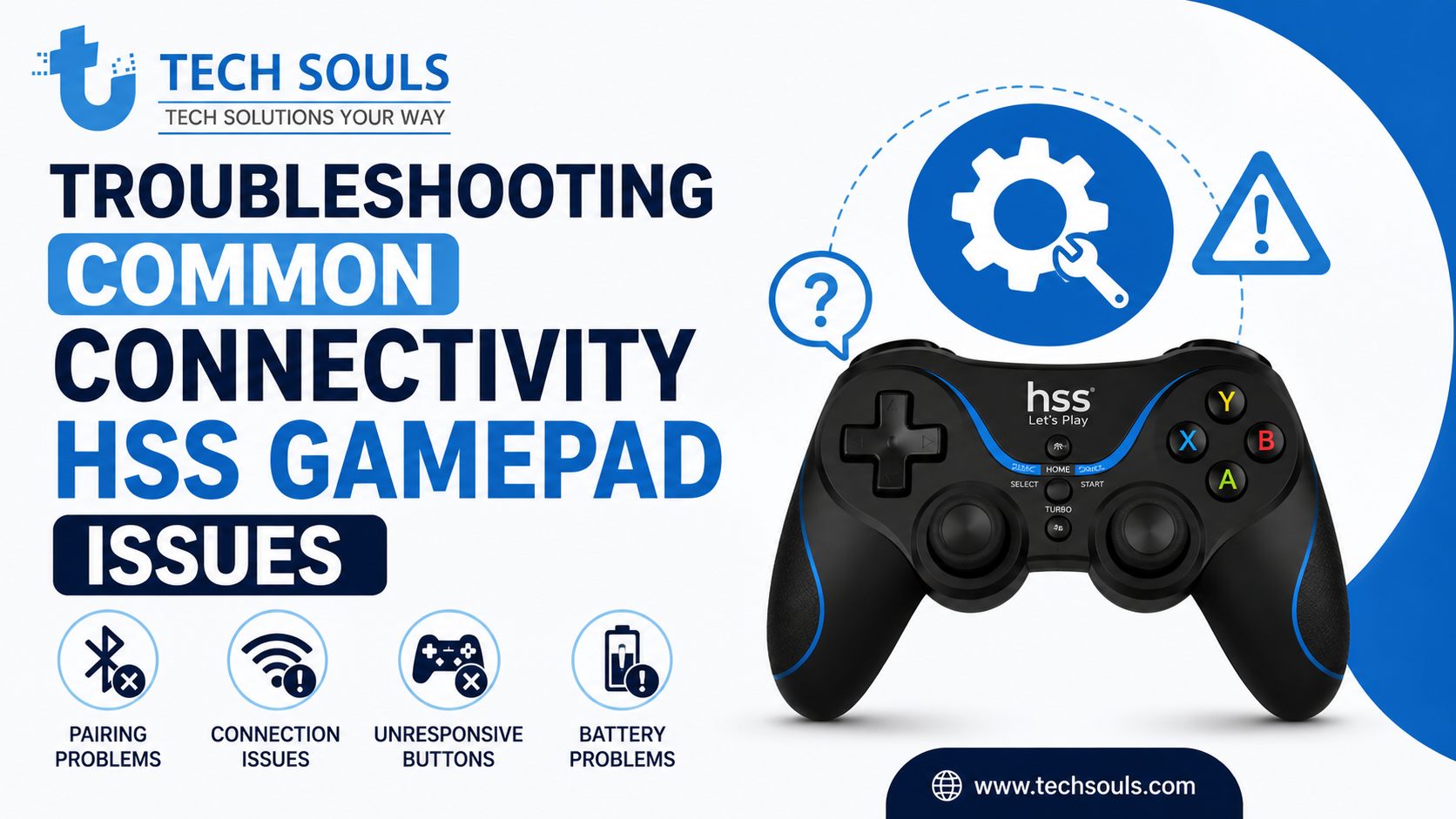
Even if you've followed the setup steps correctly, you may occasionally encounter connection or performance issues. Fortunately, most problems can be resolved with a few simple checks.
1. Connectivity HSS Gamepad Not Connecting
If your controller doesn't appear in the Bluetooth device list or fails to connect:
Try These Fixes
- Ensure the controller is sufficiently charged.
- Restart both the controller and the device.
- Remove the controller from previously paired Bluetooth devices and pair it again.
- Turn Bluetooth off and back on.
- Move closer to the device to avoid signal interference.
- Verify that the controller is in pairing mode, not just powered on.
Pro Tip: If the controller was previously paired with another phone or PC, disconnect it from that device before attempting a new connection.
2. Controller Keeps Disconnecting
Frequent disconnects are usually caused by signal interference or low battery.
Possible Causes
- Low battery level
- Bluetooth interference
- Weak wireless signal
- Too much distance between devices
- Outdated Bluetooth drivers (Windows)
Solutions
- Recharge the controller.
- Stay within the recommended Bluetooth range.
- Keep the controller away from Wi-Fi routers or other devices that may interfere.
- Update your computer's Bluetooth drivers.
- Use the USB cable or 2.4GHz receiver for a more stable connection.
3. Controller Is Connected but Doesn't Work
Sometimes the controller connects successfully, but games don't recognize any input.
Check the Following
- Does the game support external controllers?
- Is the correct controller input mode selected?
- Does the game require manual controller activation in its settings?
- Is Steam Input or another controller configuration tool overriding the default settings?
Testing the controller with a controller testing utility or another compatible game can help determine whether the issue is with the controller or the game itself.
4. Buttons Are Mapped Incorrectly
If the button layout doesn't match what's shown in-game:
Solutions
- Use the game's built-in controller settings.
- Remap buttons through Steam Input if playing on PC.
- Check whether the controller is using the correct input mode.
- Restart the controller after changing modes.
5. Input Lag During Gameplay
Input lag can make games feel slow or unresponsive.
Common Reasons
- Weak Bluetooth connection
- Signal interference
- Background applications
- High system load
- Wireless congestion
Improve Performance
- Close unnecessary applications.
- Reduce the distance between the controller and device.
- Switch to the 2.4GHz receiver if available.
- Use a wired USB connection for competitive gaming.
6. Controller Won't Charge
If the battery doesn't appear to charge:
- Try a different USB cable.
- Use another charging adapter or USB port.
- Check for dust or debris in the charging port.
- Allow the battery to charge for at least 30 minutes before testing.
If the controller still won't power on after charging, the battery or charging circuit may require service or replacement.
How to Reset the Connectivity HSS Gamepad
If you're experiencing persistent issues, resetting the controller can help.
A general reset process is:
- Turn off the controller.
- Hold the Reset button (if available) for several seconds.
- If no reset button exists, hold the Power button for 10–15 seconds.
- Restart the controller.
- Pair it again with your device.
Note: Reset methods vary by model. Refer to your product manual if your controller includes a dedicated reset procedure.
XInput vs DirectInput Explained
Many Windows-compatible controllers support one of two input standards.
| Feature | XInput | DirectInput |
| Best for Modern PC Games | ✅ | Limited |
| Xbox-style Compatibility | ✅ | ❌ |
| Legacy Game Support | Limited | ✅ |
| Automatic Detection | Usually | Sometimes Manual |
| Recommended | Modern Games | Older Games |
Which Should You Use?
- XInput is recommended for most modern Windows games.
- DirectInput may be useful for older titles or legacy software.
If your controller supports switching between these modes, choose the one that best matches the game you're playing.
Steam Configuration Tips
Steam includes powerful controller support.
To configure your controller:
- Open Steam.
- Go to Settings > Controller.
- Enable the appropriate controller support.
- Detect your controller.
- Customize button mapping if needed.
Steam Input can also create custom layouts for games that don't natively support your controller.
Emulator Compatibility
Many HSS Gamepads can be used with popular emulators that support external controllers.
Examples include:
- Retro game emulators
- PSP emulators
- Nintendo emulators
- Arcade emulators
In most cases, you'll need to map the buttons within the emulator's settings before playing.
Cloud Gaming Compatibility
If your controller is recognized by your device, it may also work with cloud gaming services that support Bluetooth or USB controllers.
This can allow you to play compatible games without installing them locally, provided you have a stable internet connection.
Battery Life Tips
To maximize battery life:
- Turn off the controller when not in use.
- Lower vibration intensity if the option is available.
- Disconnect Bluetooth after gaming sessions.
- Avoid exposing the controller to extreme heat.
- Recharge before the battery is completely depleted.
Good charging habits can help extend the lifespan of rechargeable batteries.
Best Practices for Long-Term Performance
Follow these simple practices to keep your controller performing well:
- Keep firmware updated if updates are provided by the manufacturer.
- Clean the analog sticks and buttons regularly.
- Store the controller in a cool, dry place.
- Avoid dropping or placing heavy objects on it.
- Use the original charging cable when possible.
Pros and Cons
| Pros | Cons |
| Multiple connection options | Features vary by model |
| Works with several device types | Limited official documentation |
| Comfortable for extended gaming | Some models have limited iOS support |
| Easy Bluetooth pairing | Compatibility depends on the game |
| Rechargeable battery | May require manual button mapping |
Is the Connectivity HSS Gamepad Worth Buying?
The Connectivity HSS Gamepad can be a good choice for casual and budget-conscious gamers looking for a versatile controller that supports multiple devices.
It may be a suitable option if you:
- Play primarily on Android or Windows.
- Want wireless gaming without paying for a premium controller.
- Prefer a rechargeable controller.
- Need a controller for emulators or cloud gaming.
However, if you require guaranteed compatibility with PlayStation, Xbox, or advanced features like adaptive triggers or official manufacturer support, a first-party controller may be a better investment.
Key Takeaways
- Pair the controller using the connection method best suited to your device.
- Keep the controller charged and within Bluetooth range.
- Use USB or a 2.4GHz receiver for the most stable performance on PCs.
- Check input modes if games fail to recognize the controller.
- Reset and re-pair the controller when troubleshooting persistent issues.
- Regular maintenance and proper charging habits can improve long-term reliability.
Frequently Asked Questions (FAQs)
1. What is the Connectivity HSS Gamepad?
The Connectivity HSS Gamepad is a wireless gaming controller that can connect to compatible devices such as Android phones, Windows PCs, smart TVs, and some tablets using Bluetooth, USB, or a 2.4GHz wireless receiver. Available features may vary depending on the model.
2. How do I connect the Connectivity HSS Gamepad?
To connect the controller:
- Charge the controller.
- Turn it on and activate pairing mode.
- Enable Bluetooth on your device (or connect the USB receiver/cable).
- Select the controller from the available devices.
- Complete the pairing process and test the controls.
3. Is the Connectivity HSS Gamepad compatible with Android?
Yes. Most HSS Gamepad models support Android smartphones and tablets through Bluetooth, making them suitable for many controller-compatible games.
4. Can I use the Connectivity HSS Gamepad on a Windows PC?
Yes. Most models work with Windows PCs using Bluetooth, a USB cable, or a 2.4GHz wireless receiver. Some games may require selecting the correct controller input mode.
5. Does the Connectivity HSS Gamepad work with iPhone?
Some models support iPhones and iPads, while others are designed mainly for Android and Windows. Compatibility depends on the controller model and the version of iOS.
6. Why isn't my Connectivity HSS Gamepad connecting?
Common reasons include:
- Low battery
- Incorrect pairing mode
- Bluetooth interference
- Existing Bluetooth pairing with another device
- Unsupported operating system
- Outdated Bluetooth drivers
Restarting both devices and pairing again usually resolves the issue.
7. How do I reset my HSS Gamepad?
Most controllers can be reset by holding the reset or power button for several seconds. Since reset methods vary by model, consult your user manual if available.
8. Does the controller support Bluetooth?
Many HSS Gamepad models include Bluetooth connectivity. However, some versions also offer USB-only or 2.4GHz wireless receiver connections.
9. Can I use it for cloud gaming?
If your cloud gaming platform supports external controllers and your HSS Gamepad is recognized by the device, it can generally be used for cloud gaming.
10. How long does the battery last?
Battery life varies by model and usage. Factors such as vibration intensity, wireless connection type, and charging habits all affect runtime.
11. Does it support vibration feedback?
Many HSS Gamepad models include vibration support, although compatibility depends on both the controller and the game being played.
12. Is the Connectivity HSS Gamepad worth buying?
For casual gamers looking for an affordable controller with multi-device compatibility, the HSS Gamepad offers good value. If you need guaranteed compatibility with specific consoles or advanced features, a first-party controller may be a better choice.
Summary
The Connectivity HSS Gamepad provides a flexible way to enjoy games across multiple devices. Whether you're gaming on an Android phone, Windows PC, smart TV, or another supported platform, understanding the available connection methods and choosing the correct input mode can greatly improve your experience.
While official documentation is limited for some models, the setup process is generally straightforward. Following the pairing steps, maintaining a charged battery, and using the appropriate connection method will help ensure smooth gameplay.
Final Verdict
The Connectivity HSS Gamepad is a practical option for gamers who want a versatile controller without spending a premium price. Its support for Bluetooth, USB, and, on some models, 2.4GHz wireless connectivity makes it suitable for a wide range of gaming scenarios.
Before purchasing, verify the exact model's specifications and compatibility with your preferred devices and games. Taking a few minutes to confirm these details can save time and ensure a better gaming experience.