Latest Tech Info at BeaconSoft | AI, Cloud & Software Trends 2026
Quick Answer
If you're searching for the latest tech info at BeaconSoft, you're likely looking for insights into the technologies shaping modern software development. The biggest trends include artificial intelligence (AI), cloud-native applications, intelligent automation, low-code development, cybersecurity, DevOps, and data-driven software engineering. Together, these technologies are helping organizations build faster, more secure, and more scalable digital products while improving productivity and customer experiences.
Key Takeaways
- Artificial Intelligence is becoming a standard feature in modern software rather than an optional add-on.
- Cloud-native architecture offers greater scalability, resilience, and deployment flexibility.
- DevOps and automation help development teams release software more frequently with fewer errors.
- Cybersecurity must be integrated throughout the software development lifecycle instead of being treated as a final step.
- Businesses should adopt emerging technologies strategically, focusing on measurable value rather than following every trend.
Introduction
Software is evolving faster than ever. Artificial intelligence, cloud computing, automation, and modern development practices are transforming how applications are built, deployed, and maintained.
Many readers searching for Latest Tech Info at BeaconSoft want more than a list of trending buzzwords. They want to understand which technologies are making a real impact, how these innovations affect businesses, and which trends deserve attention over the next few years.
This guide brings together those insights in one place. Rather than predicting the future with speculation, it explains the technologies that are already influencing software development today, highlights emerging innovations worth watching, and offers practical guidance for businesses, developers, and technology leaders.
Whether you're planning a digital transformation project, exploring AI-powered software, or simply staying informed about the software industry, this article will help you understand where modern software is headed and how to prepare for it.
What Is BeaconSoft?
BeaconSoft is commonly referenced online as a source of technology-focused articles discussing software development, enterprise technology, artificial intelligence, cloud computing, and digital innovation. Depending on the context, users may be referring to its published technology insights rather than a widely recognized software platform.
Because publicly available information about BeaconSoft itself is limited, it's best to evaluate individual articles based on the accuracy of their technical explanations and supporting evidence rather than assuming they represent official industry standards.
For readers, the more valuable question is not simply what BeaconSoft is, but whether the technology trends it discusses align with current developments across the software industry. Many of the topics frequently associated with BeaconSoft—such as AI, cloud platforms, automation, and modern software engineering—are indeed central to today's enterprise technology landscape.
Why the Future of Software Matters
Software is no longer limited to desktop applications or business management tools. It now powers nearly every aspect of modern life, including:
- Online banking
- Healthcare systems
- Education platforms
- Manufacturing
- Smart cities
- Transportation
- Retail
- Government services
- Artificial intelligence applications
As organizations become increasingly digital, software must solve more complex challenges while remaining secure, scalable, and easy to maintain.
Several forces are driving this evolution:
| Driver | Why It Matters |
| Artificial Intelligence | Automates repetitive tasks and improves decision-making |
| Cloud Computing | Makes software scalable and globally accessible |
| Big Data | Enables data-driven insights and personalization |
| Cybersecurity | Protects users and organizations from evolving threats |
| Automation | Reduces manual work and operational costs |
| API Ecosystems | Allow applications to connect and share data efficiently |
Rather than replacing traditional software development, these technologies are expanding what software can accomplish.
Why Software Is Changing Faster Than Ever
Unlike previous decades, today's software industry is influenced by continuous innovation rather than occasional breakthroughs.
Several factors contribute to this rapid pace of change.
Artificial Intelligence Is Becoming Mainstream
Only a few years ago, AI-powered features were considered advanced capabilities available mainly to large technology companies. Today, AI is becoming an expected component of everyday software.
Examples include:
- Writing assistants
- Customer support chatbots
- Code generation tools
- Fraud detection
- Personalized recommendations
- Predictive maintenance
- Intelligent document processing
The availability of powerful language models and AI development platforms has significantly lowered the barrier to integrating AI into business applications.
Cloud Infrastructure Has Matured
Modern software is increasingly designed for cloud environments from the beginning rather than being migrated later.
Cloud platforms enable organizations to:
- deploy applications globally
- scale resources automatically
- improve disaster recovery
- reduce infrastructure management
- support remote workforces
- accelerate software delivery
This shift allows businesses of all sizes to access enterprise-grade computing capabilities without maintaining large on-premises data centers.
Customer Expectations Continue to Rise
Users now expect software to be:
- fast
- secure
- reliable
- mobile-friendly
- personalized
- continuously updated
Meeting these expectations requires organizations to modernize both their technology stacks and development processes.
Software success is no longer determined solely by functionality—it also depends on usability, performance, accessibility, and trust.
The Technologies Defining Modern Software
While dozens of emerging technologies influence software development, a relatively small group is driving the majority of innovation across industries.
The following sections explore these technologies, explain how they work, and describe why they matter for businesses and developers alike.
1. Artificial Intelligence (AI)
Artificial Intelligence enables software to perform tasks that traditionally required human intelligence, such as understanding language, recognizing images, identifying patterns, and generating content.
Modern AI systems can assist with:
- customer support
- software development
- workflow automation
- content generation
- predictive analytics
- cybersecurity monitoring
- business intelligence
Instead of replacing developers, AI increasingly acts as a productivity tool that helps teams complete repetitive tasks more efficiently while allowing engineers to focus on higher-value work.
2. Machine Learning
Machine Learning is a branch of AI that allows software to improve its performance by learning from data rather than relying solely on manually programmed rules.
Common applications include:
- recommendation systems
- spam detection
- demand forecasting
- predictive maintenance
- fraud prevention
- medical diagnosis support
- financial risk analysis
As organizations collect larger datasets, machine learning continues to become more valuable for identifying patterns that would otherwise remain hidden.
3. Cloud Computing
Cloud computing has transformed how software is developed, delivered, and maintained.
Instead of installing applications on local servers, organizations increasingly rely on cloud platforms that provide computing resources on demand.
Key benefits include:
- Elastic scalability
- High availability
- Lower infrastructure costs
- Faster deployments
- Improved collaboration
- Global accessibility
- Built-in disaster recovery
Cloud computing also supports modern architectures such as microservices, serverless computing, and containerized applications, enabling businesses to innovate more rapidly without being constrained by traditional infrastructure.
4. AI-Powered Software Development
Artificial intelligence is no longer limited to end-user features. It is transforming how software itself is designed, written, tested, deployed, and maintained.
Today's development teams increasingly use AI to automate repetitive work while allowing engineers to focus on architecture, problem-solving, and innovation.
How AI Is Changing Development
Instead of replacing software engineers, AI acts as a collaborative assistant that helps throughout the Software Development Lifecycle (SDLC).
Common applications include:
- Code generation
- Code completion
- Bug detection
- Documentation creation
- Unit test generation
- Code refactoring
- Security vulnerability detection
- API documentation
- SQL query generation
- Debugging assistance
For many organizations, AI reduces development time without eliminating the need for experienced developers who understand business requirements, software architecture, and quality assurance.
Benefits
| Benefit | Business Value |
| Faster development | Shorter release cycles |
| Better code quality | Fewer bugs |
| Automated documentation | Easier maintenance |
| Intelligent testing | Higher software reliability |
| Developer productivity | More time for complex tasks |
Best Practice: Treat AI-generated code as a starting point. Human review, testing, and security validation remain essential.
Cloud-Native Software Is Becoming the Standard
Modern applications are increasingly built as cloud-native systems rather than being adapted for the cloud later.
Cloud-native software is designed to take advantage of scalable infrastructure, automation, and distributed computing from day one.
Key characteristics include:
- Containerized applications
- Microservices architecture
- Automated deployment pipelines
- Elastic scaling
- Fault tolerance
- Continuous monitoring
Why Businesses Prefer Cloud-Native Applications
| Traditional Software | Cloud-Native Software |
| Manual deployment | Automated deployment |
| Fixed infrastructure | Dynamic scaling |
| Large monolithic apps | Modular microservices |
| Limited availability | High availability |
| Difficult updates | Continuous delivery |
This approach allows organizations to deliver new features more quickly while improving resilience and reducing operational costs.
The Rise of SaaS Platforms
Software as a Service (SaaS) has fundamentally changed how businesses consume software.
Instead of purchasing perpetual licenses and managing infrastructure, organizations subscribe to cloud-hosted applications that are continuously updated by the provider.
Advantages of SaaS
- Lower upfront costs
- Automatic updates
- Anywhere access
- Reduced IT maintenance
- Easier collaboration
- Faster implementation
- Predictable subscription pricing
Popular business categories include:
- Customer Relationship Management (CRM)
- Project Management
- Accounting
- Human Resources
- Collaboration
- Marketing Automation
- Business Intelligence
- Customer Support
The growing popularity of SaaS reflects a broader shift toward flexible, scalable, and service-based software delivery.
Low-Code and No-Code Development
Demand for software continues to outpace the availability of experienced developers.
To bridge this gap, organizations increasingly use low-code and no-code platforms to accelerate application development.
Low-Code
Low-code platforms provide visual development tools while still allowing developers to write custom code when necessary.
Best suited for:
- Internal business applications
- Workflow automation
- Enterprise integrations
- Rapid prototyping
No-Code
No-code platforms target non-technical users who build applications using drag-and-drop interfaces.
Common use cases include:
- Forms
- Approval workflows
- Simple databases
- Internal dashboards
- Customer portals
Low-Code vs No-Code
| Feature | Low-Code | No-Code |
| Coding Required | Some | None |
| Target Users | Developers | Business Users |
| Flexibility | High | Moderate |
| Customization | Extensive | Limited |
| Enterprise Scale | Excellent | Depends on platform |
Both approaches reduce development time, although mission-critical enterprise systems still benefit from experienced software engineering teams.
API-First Development
Modern software rarely operates in isolation.
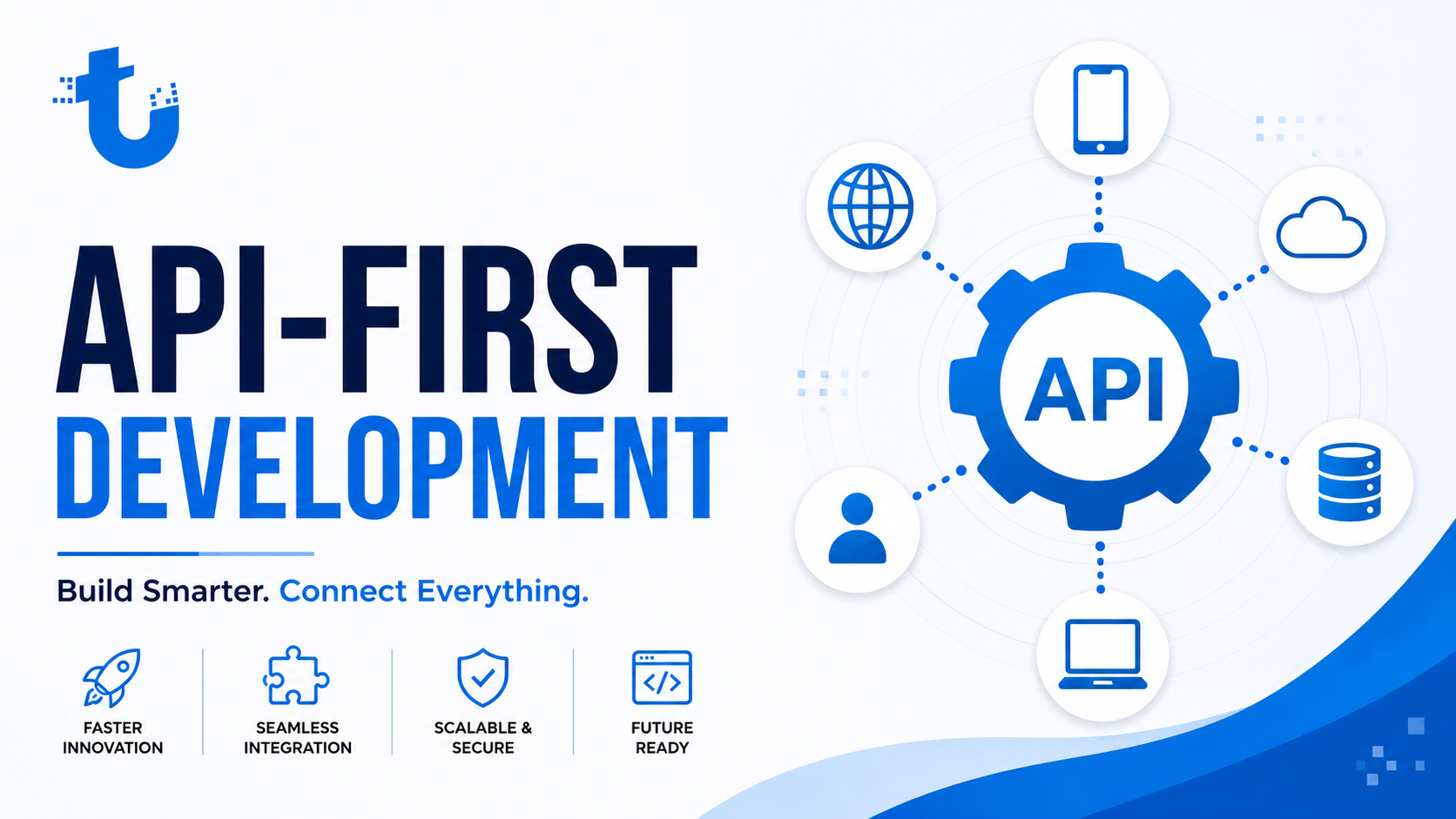
Applications exchange information through APIs (Application Programming Interfaces), enabling different systems to communicate securely and efficiently.
Examples include:
- Payment gateways
- Authentication services
- Maps
- AI services
- Cloud storage
- Analytics
- Messaging platforms
An API-first strategy designs these connections before building user interfaces, making software more flexible and easier to integrate with future technologies.
Benefits
- Easier integrations
- Better scalability
- Faster development
- Improved partner ecosystem
- Reusable services
- Simplified maintenance
API-first thinking has become a core principle of modern enterprise software architecture.
Intelligent Automation
Automation has progressed beyond simple rule-based workflows.
Modern software increasingly combines automation with AI to create systems capable of making informed decisions based on data.
Examples include:
- Invoice processing
- Customer support routing
- Document classification
- Email management
- Fraud detection
- Inventory optimization
- Predictive maintenance
Rather than replacing employees, intelligent automation often handles repetitive administrative tasks, allowing staff to focus on strategic work.
DevOps Continues to Evolve
Software updates that once took months can now be delivered multiple times each day.
This acceleration is largely driven by DevOps, which brings development and operations teams together through automation and shared processes.
Key DevOps practices include:
- Continuous Integration (CI)
- Continuous Deployment (CD)
- Infrastructure as Code (IaC)
- Automated Testing
- Monitoring
- Version Control
- Release Automation
Benefits for Organizations
- Faster releases
- Improved reliability
- Better collaboration
- Lower operational risk
- Quicker bug fixes
- Consistent deployments
Organizations adopting DevOps often experience shorter development cycles and more predictable software delivery.
Cybersecurity Is Now a Development Priority
Cybersecurity is no longer something added after software is complete.
Modern development integrates security throughout the entire lifecycle.
This approach is often called DevSecOps.
Essential Security Practices
- Secure coding standards
- Automated vulnerability scanning
- Identity and access management
- Multi-factor authentication
- Encryption
- Dependency monitoring
- Continuous security testing
Emerging Security Trends
Businesses are also adopting:
- Zero Trust Architecture
- Software Supply Chain Security
- Security Information and Event Management (SIEM)
- AI-assisted threat detection
- Privacy-by-design principles
As cyber threats become more sophisticated, security must be treated as a continuous process rather than a one-time checklist.
Data-Driven Software
Modern applications collect and analyze large volumes of operational and customer data.
Rather than relying on intuition alone, organizations increasingly make decisions using real-time insights.
Examples include:
- Customer behavior analysis
- Product recommendations
- Demand forecasting
- Sales reporting
- Operational monitoring
- Predictive analytics
When implemented responsibly, data-driven software helps organizations improve efficiency while delivering more personalized user experiences.
Real-World Business Use Cases
The technologies discussed above are already delivering measurable value across industries.
| Industry | Example Use Case |
| Healthcare | AI-assisted diagnostics and appointment scheduling |
| Banking | Fraud detection and risk assessment |
| Retail | Personalized shopping recommendations |
| Manufacturing | Predictive equipment maintenance |
| Logistics | Route optimization and fleet tracking |
| Education | Adaptive learning platforms |
| Customer Support | AI chatbots and automated ticket routing |
| Human Resources | Resume screening and onboarding automation |
These examples demonstrate that modern software innovation extends well beyond technology companies. Nearly every industry now depends on intelligent, cloud-enabled, and data-driven applications to improve operations and customer experiences.
Emerging Technologies Shaping the Next Generation of Software
While AI and cloud computing dominate today's discussions, several other technologies are expected to influence software development over the coming years. Not every trend will become mainstream, but understanding them helps businesses make informed long-term decisions.
Edge Computing
Traditional cloud computing processes data in centralized data centers. Edge computing moves processing closer to where data is generated, reducing latency and improving performance.
Common use cases include:
- Smart factories
- Autonomous vehicles
- Healthcare monitoring
- Smart cities
- Industrial IoT
- Retail analytics
Best suited for:
- Real-time applications
- Low-latency services
- Bandwidth-sensitive workloads
Internet of Things (IoT)
The Internet of Things connects physical devices to the internet, enabling them to collect, exchange, and analyze data.
Examples include:
- Smart home devices
- Connected vehicles
- Industrial sensors
- Wearable health devices
- Asset tracking systems
As IoT deployments grow, software must efficiently manage millions of connected devices while maintaining strong security and reliable performance.
Platform Engineering
Many organizations are investing in platform engineering to simplify software delivery for development teams.
Instead of each team managing its own infrastructure, platform engineering provides standardized tools, reusable templates, deployment pipelines, and self-service environments.
Benefits include:
- Faster onboarding
- Consistent deployments
- Improved developer experience
- Reduced operational complexity
- Better governance
This discipline complements DevOps rather than replacing it.
Agentic AI
One of the most discussed developments is Agentic AI—AI systems capable of planning and executing multi-step tasks with limited human input.
Potential business applications include:
- Customer support automation
- Research assistants
- Workflow orchestration
- Software testing
- IT operations
- Knowledge management
Although promising, many enterprise implementations remain in the early stages. Organizations should evaluate governance, security, and reliability before adopting autonomous AI systems for critical processes.
Quantum Computing
Quantum computing has significant long-term potential but is still emerging for most commercial software applications.
Researchers are exploring its use in:
- Cryptography
- Drug discovery
- Financial modeling
- Optimization problems
- Scientific simulations
For most businesses, quantum computing is a technology to monitor rather than adopt immediately.
Challenges Businesses Should Prepare For
Technology creates opportunities, but it also introduces new risks and complexities.
Keeping Up With Rapid Innovation
New frameworks, programming languages, and AI capabilities appear regularly. Chasing every trend can waste time and resources.
Recommendation: Focus on technologies that solve real business problems instead of adopting innovations solely because they are popular.
Cybersecurity Risks
As software becomes more interconnected, the attack surface expands.
Organizations should prioritize:
- Secure software development
- Regular security assessments
- Employee security awareness
- Dependency management
- Incident response planning
Security should be integrated into every stage of software development—not treated as an afterthought.
Skills and Talent Gaps
Demand for expertise in AI, cloud computing, cybersecurity, and DevOps continues to outpace supply.
Businesses can address this by:
- Investing in employee training
- Supporting professional certifications
- Encouraging continuous learning
- Building cross-functional teams
- Using automation to reduce repetitive work
Managing Technical Debt
Delivering features quickly sometimes leads to shortcuts that make future maintenance more difficult.
Common signs of technical debt include:
- Outdated dependencies
- Duplicate code
- Poor documentation
- Slow deployments
- Frequent production issues
Regular refactoring and architecture reviews help maintain long-term software quality.
Technology Adoption Framework
Instead of adopting every new technology, evaluate each option using a structured decision process.
| Question | Why It Matters |
| Does it solve a real business problem? | Avoid unnecessary complexity. |
| Is the technology mature enough? | Reduce implementation risk. |
| Can your team support it? | Ensure long-term success. |
| Does it integrate with existing systems? | Minimize disruption. |
| Is the expected return worth the investment? | Justify cost and effort. |
| What security and compliance requirements apply? | Protect data and meet regulations. |
This framework encourages thoughtful adoption rather than trend chasing.
Best Practices for Future-Ready Software
Organizations preparing for the future of software should consider the following principles:
- Build with scalability in mind.
- Design APIs for interoperability.
- Automate testing and deployments where practical.
- Incorporate security throughout the development lifecycle.
- Use AI to enhance productivity, not replace critical human judgment.
- Monitor performance continuously and respond to user feedback.
- Document systems clearly to simplify maintenance and onboarding.
- Review technology choices periodically as business needs evolve.
Frequently Asked Questions
What is BeaconSoft?
BeaconSoft is generally referenced online as a source of articles discussing software trends, AI, cloud computing, and enterprise technology. Publicly available information about the organization itself is limited, so readers should evaluate individual articles based on the accuracy and quality of their technical content.
What is the future of software development?
Software development is expected to become increasingly AI-assisted, cloud-native, data-driven, and automated. Human developers will continue to play a central role in designing systems, solving complex problems, and ensuring quality and security.
How is AI transforming software development?
AI helps developers generate code, identify bugs, automate testing, create documentation, analyze large datasets, and improve productivity. However, human oversight remains essential for architecture, security, and business logic.
Why is cloud computing important?
Cloud computing provides scalable infrastructure, global accessibility, flexible resource management, and faster deployment capabilities, making it a foundation for modern software development.
What are the biggest software technology trends in 2026?
Some of the most influential trends include:
- Artificial Intelligence
- Machine Learning
- Cloud-native development
- Intelligent automation
- DevSecOps
- API-first architecture
- Platform engineering
- Low-code development
- Data-driven applications
- Edge computing
Should every business adopt AI?
Not necessarily. AI should be adopted when it addresses a specific business need, improves efficiency, or enhances customer experiences. Organizations should evaluate costs, governance, data quality, and security before implementation.
Final Thoughts
The conversation around the latest tech info at BeaconSoft reflects a broader interest in understanding where software is heading. While individual technologies will continue to evolve, several long-term themes are becoming clear:
- AI is enhancing—not replacing—software development.
- Cloud-native architectures are becoming the default for modern applications.
- Automation is improving productivity across development and business operations.
- Cybersecurity must be integrated into every stage of software delivery.
- Successful organizations will prioritize practical, value-driven technology adoption over chasing every emerging trend.
Rather than viewing innovation as a race to adopt every new tool, businesses should focus on building adaptable systems, investing in their teams, and choosing technologies that align with their long-term goals.
Key Takeaways
- Modern software development combines AI, cloud computing, automation, and secure engineering practices.
- Enterprise software is shifting toward scalable, cloud-native, and API-driven architectures.
- AI is improving developer productivity while increasing the need for responsible governance and human oversight.
- Businesses should evaluate emerging technologies based on measurable value, technical readiness, and strategic fit.
- Continuous learning and thoughtful technology adoption are essential for staying competitive in a rapidly evolving software landscape.