Software Technolotal: Complete Guide (2026)
Quick Answer
Software Technolotal is a broad term used to describe modern software technologies, tools, and development practices that help individuals and businesses build, manage, automate, and optimize digital solutions. It covers software development, cloud computing, artificial intelligence (AI), cybersecurity, workflow automation, enterprise applications, and software maintenance. While the term itself is not associated with a single official product, it represents the technologies powering today's digital transformation.
What Is Software Technolotal?
Software Technolotal refers to the ecosystem of software technologies, frameworks, platforms, and methodologies used to develop, deploy, maintain, and improve modern applications. Instead of representing one software application, it encompasses the complete software lifecycle and the technologies that enable businesses to operate efficiently in today's digital environment.
Modern organizations rely on software technologies to automate repetitive tasks, improve collaboration, analyze data, secure digital assets, and deliver better customer experiences. From small startups to multinational enterprises, software has become an essential part of nearly every industry.
Whether you're managing an online store, developing a mobile app, running enterprise systems, or building AI-powered solutions, software technologies provide the foundation for innovation and productivity.
Software Technolotal at a Glance
Feature
Description
| Category | Software Technology |
| Purpose | Build, manage, and optimize digital solutions |
| Target Users | Businesses, developers, startups, enterprises |
| Deployment | Cloud, On-Premise, Hybrid |
| Main Technologies | AI, Cloud Computing, APIs, Automation, Cybersecurity |
| Primary Benefits | Productivity, Scalability, Security, Automation |
| Industries | Healthcare, Finance, Retail, Education, Manufacturing |
Why Software Technologies Matter Today
The modern digital economy depends on software. Businesses no longer compete only through products or services—they compete through technology, automation, and customer experience.
Software technologies help organizations:
- Automate repetitive work
- Reduce operational costs
- Improve decision-making
- Increase productivity
- Strengthen cybersecurity
- Scale operations quickly
- Deliver better customer experiences
- Support remote collaboration
- Integrate multiple business systems
Without modern software solutions, companies struggle to remain competitive in rapidly changing markets.
Core Components of Software Technolotal
Understanding the key components of modern software technologies helps explain how digital systems work together.
1. Software Development
Software development involves designing, coding, testing, deploying, and maintaining applications. Popular programming languages include Python, JavaScript, Java, C#, PHP, and Go. Modern development also emphasizes agile methodologies, continuous integration, and automated testing.
2. Cloud Computing
Cloud platforms allow businesses to access computing resources over the internet instead of maintaining expensive physical infrastructure. Services such as infrastructure, storage, databases, and machine learning can be scaled on demand, making cloud computing a cornerstone of modern software solutions.
3. Artificial Intelligence
AI enables software to perform tasks that traditionally required human intelligence. Examples include chatbots, recommendation systems, fraud detection, predictive analytics, and image recognition.
4. Workflow Automation
Automation reduces manual effort by allowing software to execute repetitive tasks automatically. Businesses use workflow automation to streamline approvals, customer support, marketing campaigns, invoicing, and internal operations.
5. Cybersecurity
Security is a critical component of any software ecosystem. Strong authentication, encryption, regular updates, access controls, and vulnerability monitoring help protect sensitive data from cyber threats.
6. System Integration
Modern businesses rarely rely on a single application. APIs and integration platforms connect CRM systems, accounting software, e-commerce platforms, payment gateways, and communication tools into a unified workflow.
Key Features of Modern Software Technologies
Modern software platforms typically include a combination of powerful capabilities designed to improve efficiency and user experience.
Scalability
Applications can handle increasing numbers of users and growing workloads without significant performance issues.
Automation
Routine business processes are completed automatically, reducing manual effort and minimizing errors.
Security
Advanced security measures protect user data, financial information, and organizational resources.
Cloud Accessibility
Users can securely access software from almost any location with an internet connection.
Analytics and Reporting
Built-in dashboards provide insights into business performance, customer behavior, and operational efficiency.
Integration
Software can communicate with third-party applications using APIs, reducing data silos and improving collaboration.
Benefits of Software Technolotal
Businesses adopting modern software technologies often experience several long-term advantages.
- Increased productivity
- Lower operational costs
- Better collaboration
- Faster decision-making
- Enhanced customer satisfaction
- Improved data security
- Greater scalability
- Easier remote work
- Higher business efficiency
- Competitive advantage
How Software Technolotal Works
Software Technolotal combines multiple software technologies into a structured workflow that helps businesses manage operations efficiently. Instead of relying on disconnected applications, organizations integrate development tools, cloud services, databases, APIs, security systems, and automation platforms to create a seamless digital ecosystem.
A typical workflow looks like this:
User Request
│
▼
Application Interface
│
▼
Business Logic
│
▼
Database
│
▼
Cloud Services & APIs
│
▼
Analytics & Reports
│
▼
User Dashboard
This workflow allows businesses to automate repetitive tasks, store data securely, generate reports, and improve overall productivity.
Real-World Applications of Software Technolotal
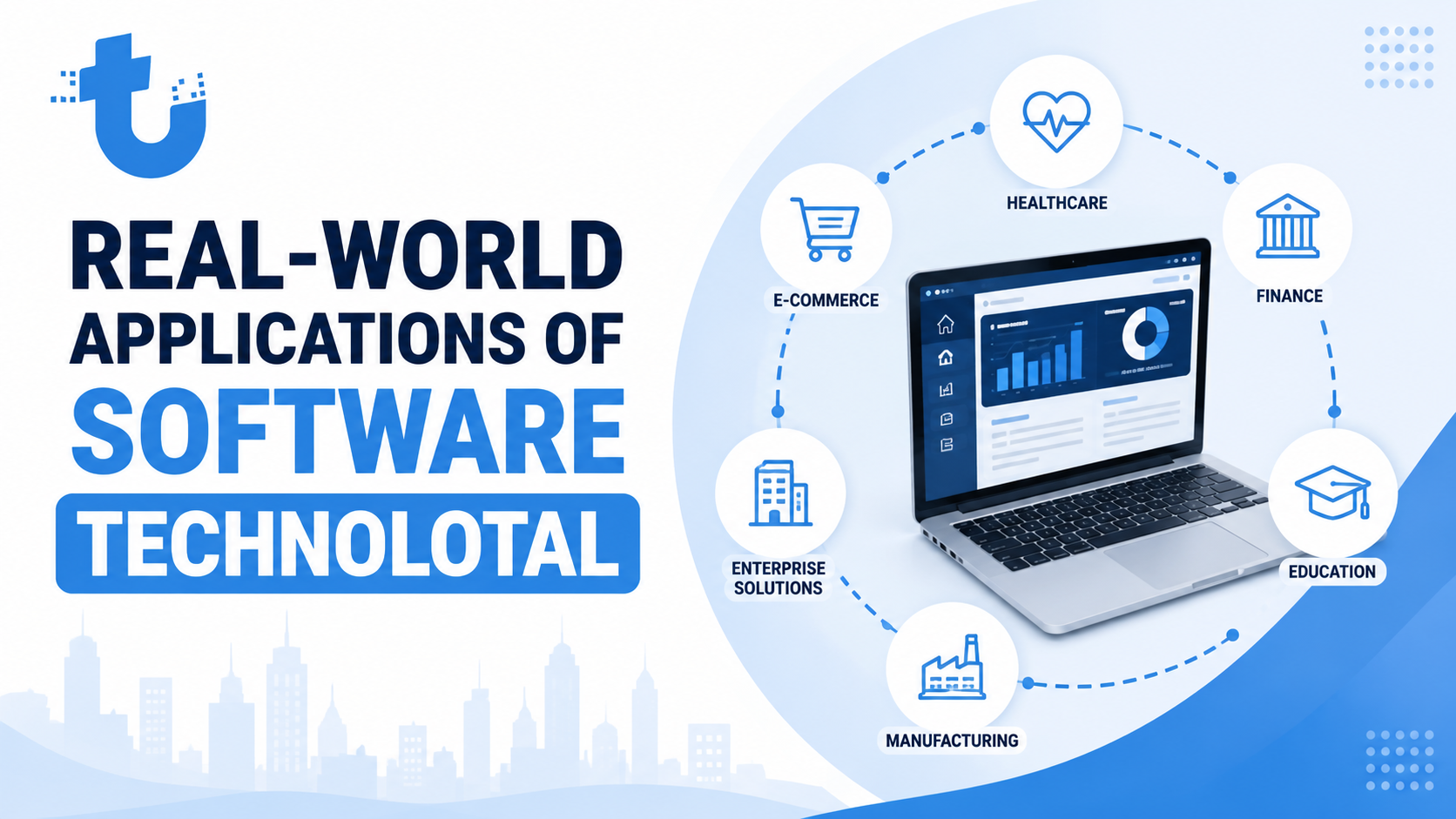
Modern software technologies are used across nearly every industry. Here are some practical examples.
1. E-commerce
Online stores use software technologies to manage products, inventory, payments, shipping, and customer support.
Common examples include:
- Inventory management
- Order tracking
- Payment gateways
- Marketing automation
- Customer relationship management (CRM)
2. Healthcare
Hospitals and clinics rely on software to improve patient care and streamline operations.
Applications include:
- Electronic health records
- Appointment scheduling
- Telemedicine platforms
- Medical billing
- Diagnostic support systems
3. Banking and Finance
Financial institutions depend on secure software systems for handling transactions and protecting customer information.
Common use cases include:
- Online banking
- Fraud detection
- Loan management
- Investment platforms
- Risk analysis
4. Education
Educational institutions use software technologies to enhance learning experiences.
Examples include:
- Learning Management Systems (LMS)
- Online examinations
- Student portals
- Virtual classrooms
- Digital attendance systems
5. Manufacturing
Manufacturers improve productivity using software for production planning, inventory tracking, and quality control.
Examples include:
- Supply chain management
- Warehouse automation
- Production scheduling
- Equipment monitoring
Common Types of Software Technologies
Software solutions generally fall into several categories.
Software Type
Primary Purpose
Common Users
| System Software | Operates computer hardware | All users |
| Application Software | Performs user tasks | Individuals & Businesses |
| Enterprise Software | Manages business operations | Large Organizations |
| Cloud Software | Internet-based services | Businesses |
| SaaS Applications | Subscription software | Companies & Individuals |
| AI Software | Intelligent automation | Multiple Industries |
| Productivity Software | Daily work management | Professionals |
| Security Software | Protects systems and data | Organizations |
Software Technolotal for Businesses
Businesses invest in software technologies because they improve efficiency while reducing costs.
Some of the biggest business benefits include:
- Faster workflows
- Better communication
- Reduced paperwork
- Improved customer service
- Data-driven decision making
- Increased profitability
- Easier remote collaboration
- Improved compliance
- Higher employee productivity
Small businesses often start with cloud-based software because it requires less infrastructure and lower upfront costs, while larger organizations may adopt enterprise systems that integrate multiple departments.
How to Choose the Right Software Solution
Not every software platform is suitable for every business. Before selecting a solution, consider the following factors.
Identify Your Business Goals
Understand the problems you want the software to solve. Examples include improving productivity, automating workflows, or enhancing customer support.
Evaluate Features
Compare the available features with your actual requirements. Avoid paying for unnecessary functionality.
Consider Scalability
Choose software that can grow alongside your business without requiring a complete replacement later.
Check Integration Options
Ensure the software works well with your existing tools such as accounting systems, CRM platforms, email services, or project management applications.
Review Security Standards
Look for features such as encryption, multi-factor authentication, role-based permissions, and regular security updates.
Compare Pricing
Evaluate both short-term and long-term costs, including subscription fees, implementation expenses, and ongoing maintenance.
Best Practices for Using Software Technologies
To maximize the value of software investments, organizations should follow proven best practices.
- Train employees before deployment.
- Keep software updated with the latest releases.
- Back up important business data regularly.
- Monitor system performance continuously.
- Limit user access based on job roles.
- Use strong passwords and multi-factor authentication.
- Document workflows and processes.
- Test updates before deploying them company-wide.
- Integrate software only when necessary.
- Review security settings periodically.
Common Mistakes to Avoid
Many businesses fail to achieve the expected results because of avoidable mistakes.
Choosing Software Based Only on Price
The cheapest solution is not always the most cost-effective in the long run.
Ignoring Employee Training
Even powerful software delivers poor results if employees don't know how to use it effectively.
Skipping Regular Updates
Outdated software may introduce security vulnerabilities and compatibility issues.
Lack of Data Backups
Without backups, businesses risk losing critical information due to hardware failures or cyberattacks.
Poor Integration Planning
Using disconnected software systems often leads to duplicated work and inconsistent data.
Security Considerations
Software security should be a priority from the beginning.
Important recommendations include:
- Enable multi-factor authentication (MFA).
- Encrypt sensitive business data.
- Keep operating systems updated.
- Apply software patches promptly.
- Perform regular security audits.
- Monitor user activity logs.
- Restrict administrative access.
- Educate employees about phishing attacks.
Strong cybersecurity practices protect both organizational assets and customer trust.
Performance Optimization Tips
To keep software running efficiently:
- Remove unused plugins and extensions.
- Optimize database performance.
- Monitor server resources.
- Use caching where appropriate.
- Compress large files.
- Schedule regular maintenance.
- Archive outdated data.
- Upgrade hardware when necessary.
Regular optimization improves speed, stability, and user satisfaction.
Software Technolotal vs Traditional Software
Choosing between modern software technologies and traditional software depends on your business goals, budget, and infrastructure. Here's a side-by-side comparison.
Feature
Software Technolotal (Modern Software Technologies)
Traditional Software
| Deployment | Cloud, Hybrid, On-Premise | Mostly On-Premise |
| Accessibility | Access from anywhere | Usually limited to local devices |
| Scalability | Easily scalable | Limited scalability |
| Updates | Automatic or continuous | Manual updates |
| Cost Model | Subscription (SaaS) or Pay-as-you-go | One-time license |
| Integration | Extensive API support | Often limited |
| Maintenance | Vendor-managed or automated | Managed internally |
| Security | Regular updates and cloud security features | Depends on local IT management |
| Collaboration | Real-time collaboration | Limited collaboration |
| Flexibility | High | Moderate |
Which Is Better?
For most modern businesses, cloud-based and integrated software solutions offer better scalability, accessibility, and automation. However, traditional software may still be suitable for organizations with strict regulatory requirements or legacy systems that require on-premise deployment.
Advantages and Disadvantages
Advantages
- Improves productivity through automation.
- Supports business growth with scalable infrastructure.
- Enables remote work and collaboration.
- Reduces manual errors.
- Enhances data security when properly managed.
- Simplifies software updates and maintenance.
- Integrates with a wide range of business tools.
- Provides valuable analytics for better decision-making.
Disadvantages
- Initial implementation may require planning.
- Subscription costs can increase over time.
- Internet connectivity is essential for many cloud-based solutions.
- Employees may need training to use new systems effectively.
- Data migration from legacy systems can be time-consuming.
Future Trends in Softwarenologies (2026–2030) Tech
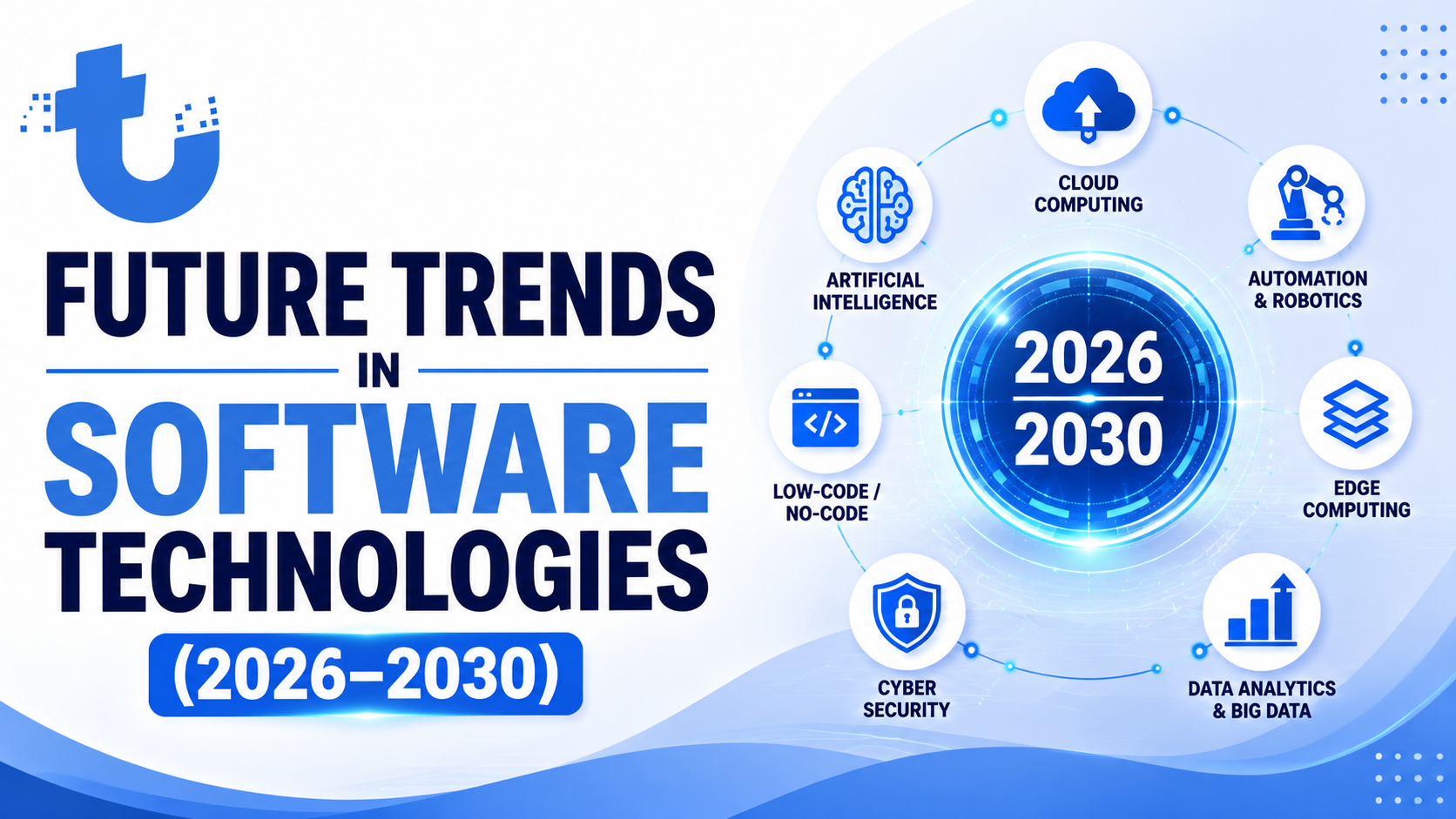
Software technologies continue to evolve rapidly. Businesses adopting these innovations will be better positioned to remain competitive.
Artificial Intelligence Everywhere
AI will become a standard feature in business software, enabling predictive analytics, intelligent automation, personalized recommendations, and natural language interfaces.
Low-Code and No-Code Development
Organizations will increasingly use platforms that allow applications to be built with minimal coding, reducing development time and empowering non-technical users.
Cloud-Native Applications
More businesses will move toward cloud-native architectures that improve scalability, reliability, and deployment speed.
Hyperautomation
Combining AI, robotic process automation (RPA), and workflow automation will help organizations automate increasingly complex business processes.
Stronger Cybersecurity
Security will remain a top priority, with greater adoption of Zero Trust architectures, AI-powered threat detection, and advanced identity management.
Edge Computing
Processing data closer to where it is generated will reduce latency and improve performance for IoT devices, smart factories, and real-time applications.
Frequently Asked Questions (FAQs)
What is Software Technolotal?
Software Technolotal is a broad term used to describe modern software technologies, tools, and practices involved in developing, deploying, managing, and maintaining digital solutions.
Is Software Technolotal a specific software product?
Based on publicly available information, the term is generally used as a concept rather than referring to a single officially documented software product.
Who can benefit from software technologies?
Businesses, developers, startups, educational institutions, healthcare providers, financial organizations, and government agencies all benefit from modern software technologies.
What industries use software technologies?
Almost every industry uses software technologies, including healthcare, finance, retail, education, logistics, manufacturing, marketing, and entertainment.
Why is cloud computing important?
Cloud computing provides flexibility, scalability, lower infrastructure costs, automatic updates, and remote accessibility, making it a core component of modern software solutions.
How does automation improve business operations?
Automation reduces repetitive manual work, minimizes human error, speeds up workflows, and allows employees to focus on higher-value tasks.
How can businesses improve software security?
Businesses should implement strong authentication, encrypt sensitive data, perform regular updates, conduct security audits, and educate employees about cybersecurity best practices.
What is enterprise software?
Enterprise software helps organizations manage core business functions such as finance, human resources, inventory, customer relationships, and operations.
What is workflow automation?
Workflow automation uses software to perform repetitive tasks automatically, improving efficiency and consistency across business processes.
What should I consider before choosing software?
Evaluate your business requirements, budget, scalability, integration capabilities, security features, vendor support, and long-term maintenance needs before selecting any software solution.
Key Takeaways
- Software Technolotal represents the broader ecosystem of modern software technologies rather than a single verified software product.
- Modern software solutions improve productivity through automation, cloud computing, AI, and system integration.
- Businesses should prioritize scalability, security, and compatibility when selecting software.
- Regular updates, employee training, and cybersecurity practices are essential for long-term success.
- Emerging trends such as AI, hyperautomation, and cloud-native development will continue to shape the future of software.
Conclusion
Software technologies have become the foundation of digital transformation across industries. Whether you're a small business owner, developer, IT professional, or enterprise decision-maker, understanding how modern software ecosystems work is essential for staying competitive.
Although Software Technolotal is not widely recognized as a specific software product, the concepts associated with modern software technologies—including cloud computing, AI, automation, cybersecurity, and enterprise software—play a vital role in building efficient, scalable, and secure digital solutions.
By choosing the right technologies, following industry best practices, and continuously adapting to new innovations, businesses can improve productivity, reduce costs, and prepare for future growth.
Continue Exploring TechSouls
Technology is constantly evolving, and staying informed helps you make better decisions whether you're interested in software, AI, cybersecurity, gadgets, or the latest tech trends. At TechSouls, we regularly publish in-depth guides, tutorials, troubleshooting articles, and breaking technology news to keep you updated with accurate and practical information. If you found this article helpful, explore more of our latest content below to expand your knowledge and stay ahead in the fast-changing world of technology.
[GDTJ45 Builder Software Guide (2026): Features & How It Works]
[Meetshaxs Performance Optimization: Boost Speed in 2026]
[DualMedia Mobile App Guide: Features, Safety & Availability]
[Social Media Stuff EmbedTree Features and Setup Guide 2026]
[Evolution of Digital Technology: Trends, AI and Innovation (2026)]
[Information About Foxtpax Software: Complete Guide (2026)]
[Endbugflow Software: Features, Benefits & How It Works]
[Aggr8Tech Digital Technology: Features, Benefits & Uses (2026)]